FixYourVPN
A free VPN is not a charity. Running one costs real money: servers in dozens of countries, bandwidth, security staff, engineers. If you're not paying with money, you're paying some other way. Independent researchers have looked into exactly what that trade-off looks like, and the results are pretty consistent. Here are six reasons to be cautious about free VPNs.
The 6 reasons at a glance:
- They sell your browsing data to advertisers and data brokers
- Many inject ads directly into your web traffic
- Some route strangers' traffic through your home internet connection
- Many provide weak or no real encryption
- Streaming services block them faster than paid VPNs
- No independent auditing means their privacy claims can't be verified
1. They make money by selling your data
Your browsing history, app usage, location data, and device identifiers have real commercial value to advertisers and data brokers. For many free VPN providers, this is how they cover their costs: log what you do online and sell access to it.
This isn't an unusual exception. Multiple independent reviews of free VPN privacy policies have found that a significant proportion explicitly disclose sharing data with third-party partners, often in deliberately vague terms. The result is a bit backwards: you install a VPN to protect your privacy, and it's the VPN itself doing the damage. For a deeper look at how to evaluate any VPN's trustworthiness, see our guide on whether VPNs are actually safe.
2. Many inject adverts directly into your web traffic
Because a VPN sits between your device and the internet, it has access to your traffic. Several free VPN apps have been found exploiting that access to insert adverts into web pages you visit, including on sites that don't normally carry ads.
What makes this more than just annoying is what it tells you about the provider: they're willing to interfere with your traffic in ways they didn't mention when you installed the app. If they'll do it for ads, there's no clear reason they wouldn't do it for other purposes too.
3. Some route strangers' traffic through your internet connection
Hola VPN is the most documented example of this model. Rather than paying for dedicated servers, it built its network by routing other users' traffic through subscribers' home internet connections. Your broadband becomes a relay for data sent by people you'll never meet, without meaningful disclosure of what that traffic contains.
This eats into your data allowance, can slow your connection during busy periods, and puts you in a legally murky position regarding what you're facilitating. You agreed to install a VPN app. You didn't agree to let strangers' data pass through your home internet connection.
The question with any free VPN is never whether they're making money from you. It's how. Once you look into the common answers, you tend to want to pay for one.

4. Many provide little or no real encryption
A VPN's fundamental job is to encrypt your traffic. An app that doesn't do that isn't really a VPN: it's software that routes your data through a third party's servers while creating the appearance of security. A 2020 investigation into the 150 most downloaded free VPN apps across the Apple App Store and Google Play found widespread data sharing with advertising networks and significant ownership concentration in countries with weaker privacy laws.
Beyond outright lack of encryption, some free apps use older connection methods with known security flaws. Without an independent audit, there's no way to verify what's actually happening to your traffic. A trustworthy VPN provider publishes audit results from named firms. A free VPN that's never been audited is asking you to take its word for it. For guidance on what those audits involve, see our overview of what makes a VPN actually safe.
5. Streaming services block them almost immediately
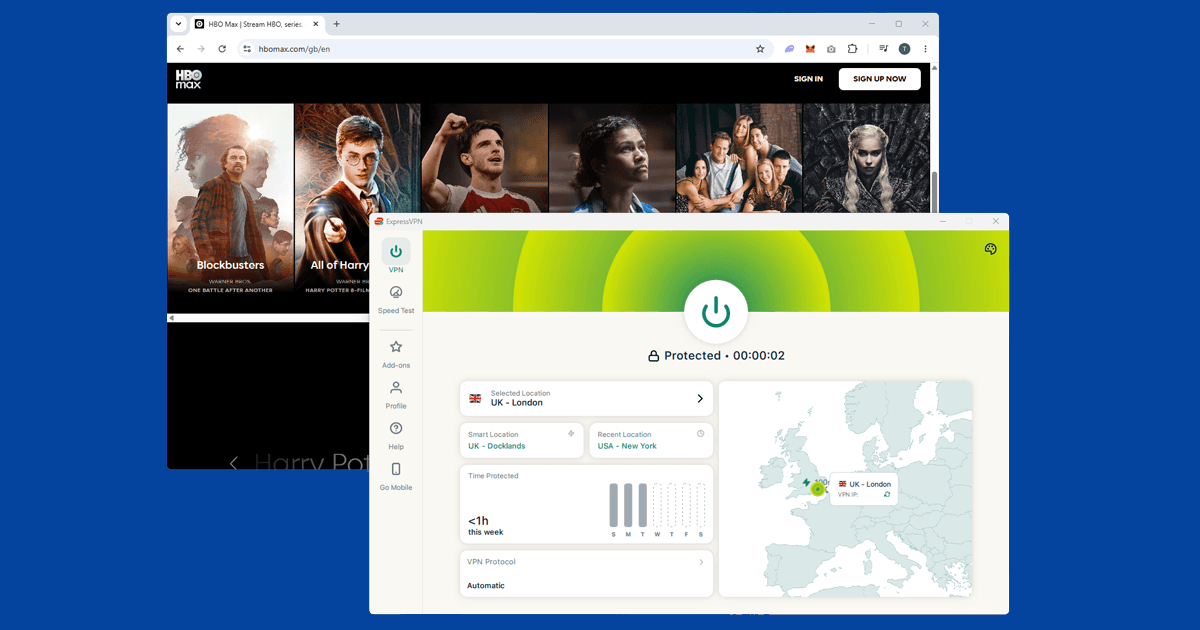
Free VPNs operate a small pool of shared IP addresses. Because many users share those addresses, streaming services like Netflix, BBC iPlayer, and Disney+ identify and block them quickly. The result: free VPNs are among the first to stop working for streaming, and the last to be fixed, because there's no business incentive to keep up with detection.
Paid VPN providers invest continuously in rotating server addresses and maintaining streaming compatibility because it's what customers pay for. For streaming, a paid VPN isn't just better: it's the only option that works reliably. See our tested VPN picks for providers we verify against all major streaming services.
6. There's no accountability and no way to verify their claims
Reputable paid VPN providers commission independent security firms to audit their systems and verify their no-logs claims. These audits are published. You can read them. They're not perfect, but they represent a meaningful and verifiable form of accountability.
Most free VPNs offer no such verification. A privacy policy that says "we don't log your data" is an unverified claim made by the same company that benefits financially from logging it. Without an audit, the claim is worth nothing. The absence of accountability isn't a gap in the marketing. It's the point.
What to use instead
The good news is that a trustworthy VPN doesn't cost much. Reputable paid options typically start from around £1.69 per month on a longer-term plan. For that, you get an independently audited no-logs policy, a large rotating server network, reliable encryption, and actual customer support when something goes wrong. That's a very different proposition from the six issues above.
If you genuinely can't stretch to a paid plan right now, ProtonVPN's free tier is one of the rare exceptions worth considering. It has a verified no-logs policy backed by independent audits, and it's transparent about how it stays afloat: paying subscribers cover the costs, not data collection. The practical trade-offs are a limited choice of server locations and slower speeds at busy times, but it won't sell your data.
Our recommended providers are tested regularly against all major streaming services and picked on the basis of independent testing, not commission rates. If you're not sure where to start, that's the place to look.